
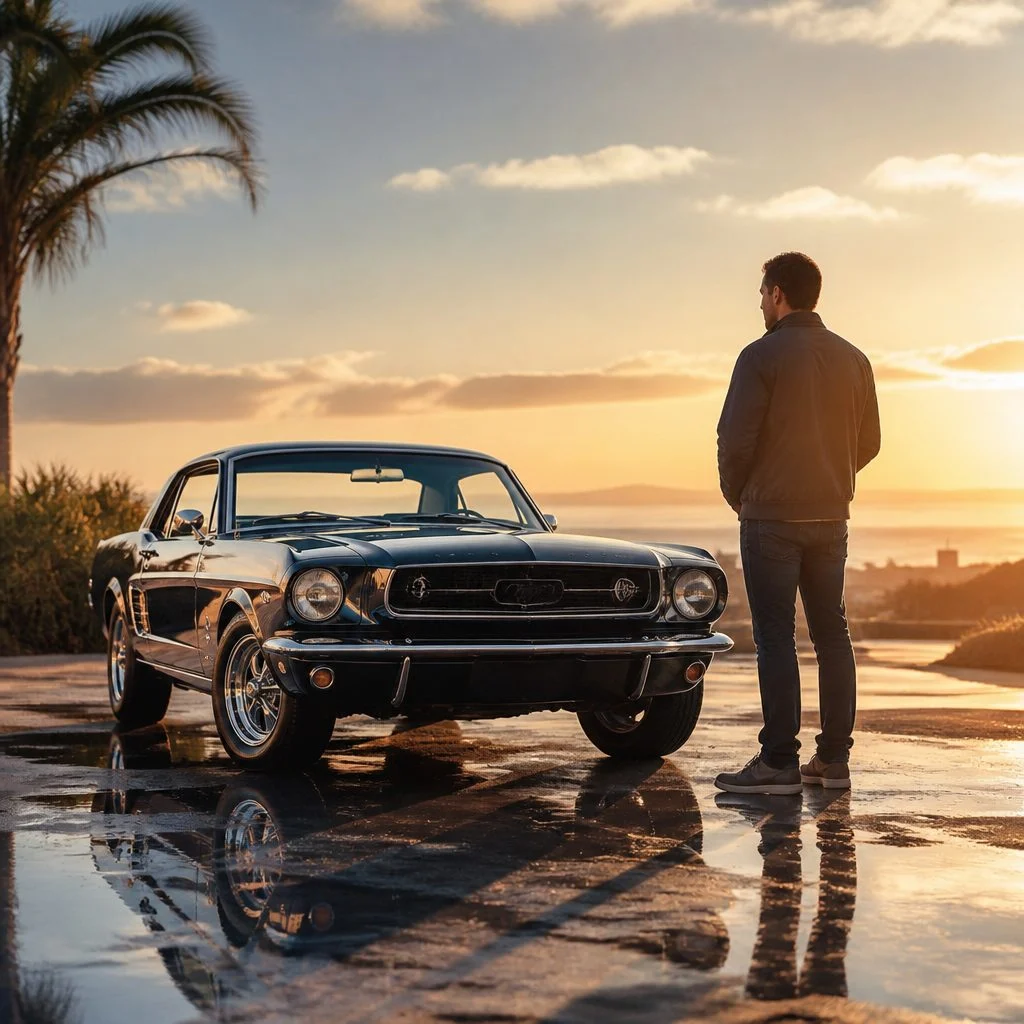
Some anniversaries call for flowers, and some call for a car that shakes the windows of the garage. If your partner, parent or lifelong friend has spent forty years talking about the fastback they sold when the first baby arrived, a 1960s Mustang is not an extravagance — it is a very loud thank-you note. But a vintage muscle car is also a mechanical object with sixty years of history baked into its seams, and the gap between a wonderful surprise and an expensive misunderstanding is mostly a matter of preparation.
Here is how to approach it with clear eyes: what these cars actually are, what they cost beyond the purchase, and how to make the handover land the way you imagine it.
Why the 1960s Mustang Still Works as a Gift
The first-generation Mustang occupies an unusual spot in the collector world: it is iconic without being unobtainable. Ford built them in enormous numbers between 1964 and 1973, which means parts support is extraordinary. Sheet metal, trim, wiring harnesses, interior kits and driveline components are all reproduced, often by multiple suppliers. Compare that to a low-volume European sports car of the same era, where a single missing piece of interior brightwork can stall a project for a year.
The emotional math matters too. These cars were bought by young people with new jobs and new marriages, so they sit directly on top of the memories that anniversaries are built from. A six-cylinder coupe in a tidy, honest condition can carry just as much meaning as a big-block fastback — and will be far easier to live with. Decide early whether you are buying a memory or buying performance, because those two goals pull the budget in different directions.
Build the Budget Backwards
Most first-time classic buyers spend everything they have on the purchase and nothing on the aftermath. Reverse that. Decide your total number, then hold back a meaningful reserve — many experienced owners keep something in the range of 10 to 20 percent of the purchase price aside for the first year. New tires, a fresh battery, brake hoses, a cooling system flush, a carburetor rebuild and a full fluid service add up quickly on a car that has been sitting in a climate-controlled display for three years.
Insurance is cheaper than people expect if you use a specialist agreed-value policy with mileage limits, but storage rarely is. Factor in a dry, secure space with a hard floor, and a battery tender. If you are reading up before you commit, a clear-eyed rundown of the things worth understanding before buying a classic car will save you from the three most common regrets: underestimating rust repair, overestimating your own tolerance for breakdowns, and buying sight unseen from photographs.
What to Actually Inspect
Rust Is the Whole Story
On a first-generation Mustang, corrosion hides in predictable places: the torque boxes, the front frame rails ahead of the shock towers, the floor pans under the carpet, the rear window channel on fastbacks, the cowl vent area, and the lower quarter panels behind the wheels. Bring a magnet and a flashlight. Lift the trunk mat and look at the drop-offs either side of the spare well. If the car has been repainted, ask what was underneath it — filler over pitting looks magnificent for about two winters.
Numbers, Paperwork and Honesty
Check the VIN on the driver’s door jamb and the inner fender, and ask for a Marti Report if the seller has not already produced one, since Ford’s build records for this era are unusually complete. Many cars have been upgraded over the decades — a 289 car wearing a 390 badge is common. None of that is a problem as long as the seller says so in writing. Vague answers about the drivetrain are a reason to walk, not a reason to haggle.
Drive It, Don’t Just Rev It
A cold start tells you about the ignition and fueling; ten miles tells you about everything else. Listen for driveline clunk on throttle transitions, feel whether the car tracks straight under braking, and watch the temperature gauge in traffic rather than on an open road. Original-spec drum brakes and manual steering are authentic, and they are also a genuine adjustment for anyone used to a modern car. If the gift recipient has a bad shoulder or a long commute, that matters more than correctness.
Original, Restored or Reimagined?
There are three honest ways to own a 1960s Mustang. You can preserve a survivor, accepting its quirks and its limits. You can commission a concours restoration, which rewards judges and punishes anyone who wants to drive at night in the rain. Or you can buy a car built to vintage proportions with modern mechanicals — independent suspension geometry, four-wheel discs, fuel injection, air conditioning that works, and a sound system that does not whistle.
That third route is where anniversary buyers often land, because the car has to earn its place in real life once the candles are blown out. Builders such as Revology produce cars in this vein, and a configuration like the 1968 Mustang GT 2+2 fastback Cobra Jet shows the thinking clearly: the shape and badging that triggered the memory in the first place, paired with contemporary brakes, cooling and electrical systems so that a 300-mile coastal drive is a pleasure rather than a gamble. It is worth understanding this category before you shop, if only so you can decide whether you want period authenticity or period atmosphere — they are not the same gift.
Make the Handover a Real Memory
Logistics ruin more surprises than secrecy does. Arrange enclosed transport rather than driving it home in February. Have the title, bill of sale and insurance binder ready before the reveal, so nobody spends the afternoon on hold. If you can, schedule the first drive somewhere with a destination attached — a coast road, a diner, the church where the wedding happened. A card taped to the steering wheel with the route written out by hand outperforms any bow on the roof.
Line Up Your Specialists First
Owning anything precious means knowing who to call before you need them. Families learn this with their pets, which is why so many keep the number of a trusted clinic on the fridge and read up on why animal hospitals are indispensable during emergencies long before an emergency happens. A classic Mustang deserves the same forethought: a mechanic who understands carburetors or early EFI, an upholsterer, a paint shop that will blend rather than respray, and a flatbed service that answers on Sundays. Make those calls in the first month of ownership, while nothing is wrong and everyone has time to talk.
The Payoff
A vintage Mustang is a strange and wonderful anniversary present because it refuses to be passive. It asks for attention, it rewards curiosity, and it pulls people into conversation at every gas station. Buy carefully, keep a reserve, insist on documentation, and choose the version of the car that suits the life it is entering. Do that, and the gift stops being an object on the driveway and becomes a standing invitation to go somewhere together.