
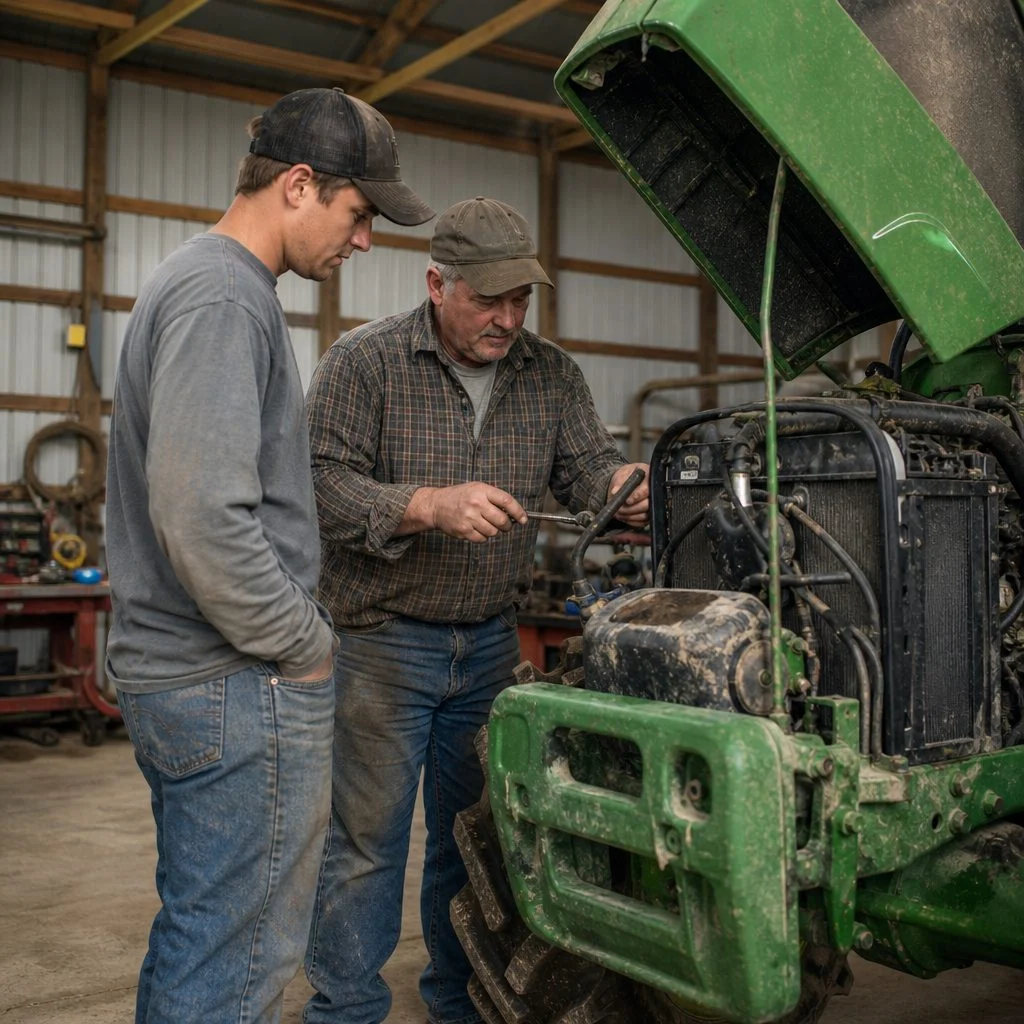
Anniversary gift lists have a reputation for being romantic and impractical. On a small farm, a few acres of pasture or a rural lot with a long driveway, the most memorable presents tend to be the ones that get used every week. A new mower deck, a set of replacement blades, a service appointment booked and paid for before hay season — these are the gifts that quietly say “I noticed what you spend your Saturdays doing.”
That practical streak isn’t a modern invention. The fourth year of marriage is traditionally linked to fruit and flowers, but the modern list leans toward appliances and household equipment, which is why so many couples browsing fourth anniversary quotes, captions and wishes end up pairing a heartfelt card with something that plugs in, bolts on or starts with a key. If the two of you share a tractor, a zero-turn mower or a brush hog, the guidance below is worth reading before you spend anything.
Start With the Acreage, Not the Horsepower
The most common buying mistake on a rural property is choosing a machine by engine size and sorting out the rest later. Work backwards instead: list the jobs you actually do in a year, then match a machine to the heaviest of them.
Sub-compact and compact tractors
For properties in the two-to-twenty-acre range, a sub-compact or compact tractor usually earns its keep. These machines mow, move gravel, grade a driveway, dig post holes and haul round bales of a modest size. They fit through a standard gate, turn inside an orchard row and don’t churn a lawn into ruts. Trade-offs: limited lift capacity at the loader and three-point hitch, and a shorter wheelbase that feels nervous on steep ground.
Utility tractors
Once you’re running a hay operation, feeding cattle through winter or pulling heavier tillage, you need the weight and hydraulic flow of a utility tractor. The extra cost shows up in capability — a loader that lifts a full bale without squatting, remote hydraulic outlets for implements, and a PTO rated for a bigger cutter. The trade-off is footprint, fuel burn and a machine that’s overkill for trimming around a house.
Questions worth asking before you sign anything
- What is the loader lift capacity at full height, not just at the pins?
- Does the hitch category match the implements you already own?
- Is a cab worth it for how much winter and dust work you do?
- How many hours are on a used unit, and what maintenance records exist?
- Can you get parts for this model locally, or will every repair involve shipping?
That last point decides more ownership experiences than any brochure figure. A machine supported by a dealership within driving distance is a different animal from one you bought three states away because it looked cheap online.
Genuine Parts Are Cheaper Than They Look
Filters, belts, blades and hydraulic fittings are where owners try to save money, and often where they lose it. An off-brand oil filter with the wrong bypass valve, or a belt that’s a quarter-inch off spec, can cost a season’s worth of savings in one afternoon. Genuine parts for tractors, mowers and balers are specified to the tolerances the engineers designed around — and when a part fails under warranty, documentation matters.
A sensible middle ground: keep genuine filters, belts, blades and seals on hand for anything that touches the engine, hydraulics or cutting system, and be more relaxed about cosmetic items. Write your model and serial numbers on an index card in the shop. Half the delay in any parts counter conversation comes from guessing which variant you own.
A Seasonal Service Rhythm You Can Actually Keep
Maintenance schedules fail when they’re too elaborate. Tie yours to the calendar instead of to hour meters you forget to read.
- Late winter: change engine oil and filters, grease every zerk, inspect tires and check battery condition before the first wet spring job.
- Spring: sharpen and balance mower blades, check deck spindles for play, inspect belts for glazing and cracks, and clean the radiator screen.
- Mid-summer: blow out air filters, top off hydraulic fluid, re-torque wheel bolts after heavy loader work, and check baler twine paths and pickup teeth.
- Fall: flush coolant on schedule, service the PTO shaft and shear bolts, and repair the small leaks you’ve been ignoring.
- Before storage: stabilize fuel, charge or remove the battery, wash off corrosive residue, and park on boards rather than bare dirt.
Two cheap habits outperform everything else: grease on a schedule, and fix leaks while they’re drips. The farm economy is tight enough as it is — national news coverage of the pressures facing farming families is a reminder that downtime in the middle of a narrow weather window is one of the most expensive things that can happen on a working property.
Knowing When to Hand It to a Dealer
Do your own oil changes, blade sharpening, filter swaps and grease work. Hand over anything involving hydrostatic transmissions, fuel injection systems, emissions components, high-pressure hydraulics or electrical diagnostics on a machine with a control module. Those jobs need service literature, specialty tools and the kind of pattern recognition that only comes from seeing the same failure fifty times.
This is also where a relationship with a nearby dealership pays off. H&R Agri-Power is a farm and outdoor power equipment dealership that sells new and used equipment, including Kubota tractors, and backs it up with parts and repair service across its locations in Kentucky, Tennessee, Indiana and surrounding states — so a western Kentucky owner looking for lawn mower repair Owensboro KY can usually get a mower, a compact tractor and a baler looked at by the same parts and service counter rather than chasing three different specialists. Booking that work in the shoulder season, rather than the week your grass hits knee height, is the single best scheduling decision you can make.
Make the Gift Specific
If you’re buying for a partner who farms, skip the generic gadget. Ask which implement they borrow from a neighbor every year, which attachment would save them a full weekend, or which repair they keep postponing. A pre-paid service visit, a spare set of blades, a proper grease gun with a flexible hose, or a parts credit at the counter they already use will be remembered longer than anything wrapped in cellophane.
Write the card anyway. The sentiment and the socket set belong together — one acknowledges the years, the other acknowledges the work those years were built on.