
Have you ever been texting a friend and suddenly saw WTM pop up in their message? 😲 You paused, confused, wondering, “What does this even mean?”
Don’t worry — you’re not alone! In the world of texting and social media, acronyms like WTM fly around constantly, and staying updated is essential to avoid misunderstandings.
This guide will explain everything about WTM meaning in text, its origins, examples, and how to use it like a pro. 🚀
What Does WTM Mean in Text? 🤔
The acronym WTM stands for “What’s the Matter?” or in some contexts, “What’s the Move?” depending on the conversation type. It is widely used in casual texting, online chats, and social media platforms. Using WTM can save time and make your messages feel more modern and relatable. 📝
Two Main Interpretations of WTM
- What’s the Matter? – Used when you want to check if someone is okay or if something is wrong. Example: “You seem upset, WTM?” 💬
- What’s the Move? – Used when asking someone about plans or next actions. Example: “WTM tonight? Movie or dinner?” 🍿
Origin of WTM: Where Did It Come From? 🕵️♂️
The exact origin of WTM is not pinpointed to a single creator, but it emerged from the rise of online chatting and SMS culture in the early 2000s. With the popularity of instant messaging platforms and text-based communication, people started using abbreviations to save time and make texting more fun. 🎉
Why People Use WTM in Texts 💌
Using WTM has several advantages:
- Saves Time ⏱️ – Shortens long phrases like “What’s the Matter?” or “What’s the Move?”
- Casual Tone 😎 – Makes conversations feel more friendly and relaxed.
- Easy to Remember ✨ – A simple 3-letter acronym is easier to type quickly.
- Modern Chat Culture 🌐 – Shows you’re up-to-date with texting slang.
WTM vs Other Common Acronyms 📲
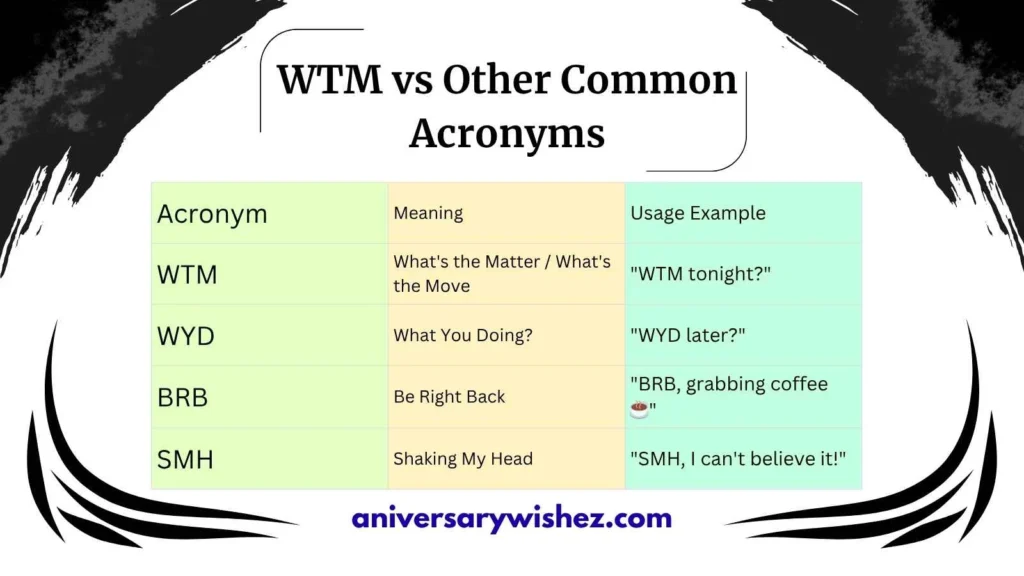
In texting, there are many acronyms similar to WTM. Here’s a comparison table for quick reference:
| Acronym | Meaning | Usage Example |
|---|---|---|
| WTM | What’s the Matter / What’s the Move | “WTM tonight?” |
| WYD | What You Doing? | “WYD later?” |
| BRB | Be Right Back | “BRB, grabbing coffee ☕” |
| SMH | Shaking My Head | “SMH, I can’t believe it!” |
How to Use WTM Correctly in Conversations ✅
Using WTM appropriately depends on the context. Here’s how:
- Checking on Someone: Use “What’s the Matter?” when your friend seems upset. “You seem off today, WTM?”
- Making Plans: Use “What’s the Move?” when discussing plans. “WTM this weekend? Hiking or movies?”
- Keep it Casual: Avoid using WTM in formal or professional settings. It’s strictly conversational. 🗨️
Examples of WTM in Texts 📩
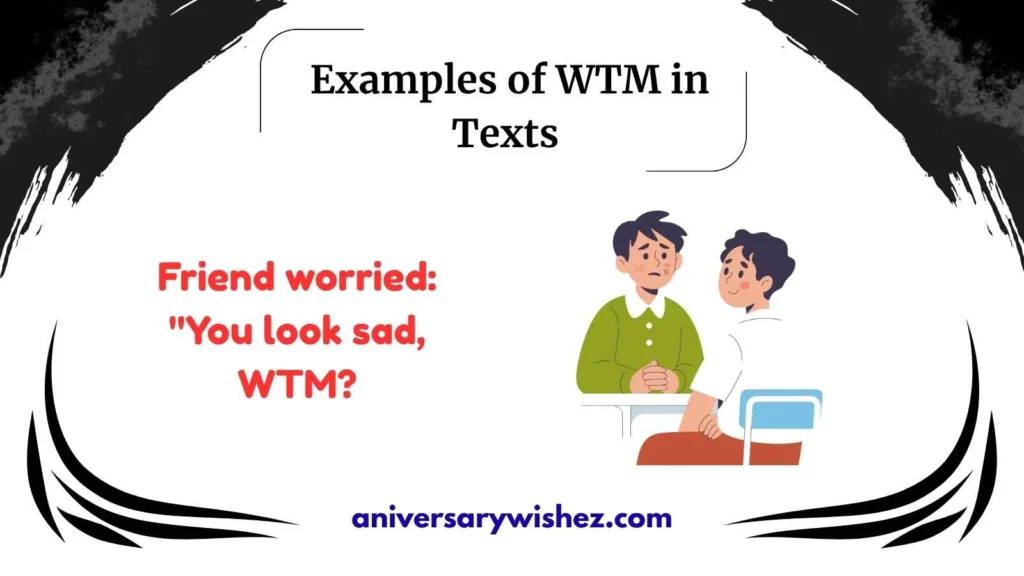
Here are real-world examples to understand WTM better:
- Friend worried: “You look sad, WTM?” 😢
- Planning an outing: “WTM tonight? Game night or pizza?” 🍕
- Checking on work: “WTM with the project deadline?” 🗂️
Emojis to Pair with WTM 🎨
Adding emojis can make your text more expressive:
- 😕 – Confusion or concern (WTM = What’s the Matter?)
- 🍿 – Fun/outing (WTM = What’s the Move?)
- 💬 – General chat
- 🚀 – Excitement or plan suggestion
Common Mistakes When Using WTM ❌
- Using WTM in professional emails or formal messages
- Mixing up “What’s the Matter?” and “What’s the Move?” in the wrong context
- Overusing it, which can make texts feel lazy or impersonal
WTM in Social Media Contexts 🌐
WTM is frequently used on:
- Instagram Stories: Asking friends about plans or check-ins
- Snapchat: Casual messages and responses
- Twitter / X: Quick interactions or replies in threads
Synonyms and Related Acronyms 🔗
Similar acronyms to WTM include:
- WYD – What You Doing?
- WBU – What About You?
- HBU – How About You?
- BRB – Be Right Back
Tips to Sound Natural Using WTM 💡
- Match the tone of the conversation – informal and friendly
- Use emojis to enhance context
- Keep it short and sweet – texting is about efficiency
- Practice with friends to get used to it
WTM in Different Cultures and Languages 🌍
While WTM is popular in English-speaking countries, some cultures prefer full phrases instead of abbreviations. Always consider your audience. 🌐
FAQs
- Q1: Can WTM mean anything else?
Yes, depending on context. Most commonly, it means “What’s the Matter?” or “What’s the Move?” - Q2: Is WTM formal?
No, it’s strictly casual and used in texting or social media. - Q3: Can I use WTM at work?
Only if texting close colleagues in an informal chat. Avoid in professional emails. - Q4: How do I respond to WTM?
Answer based on the context: if it’s “What’s the Matter?” explain the issue; if “What’s the Move?” suggest a plan.
Conclusion:
Understanding WTM meaning in text is essential for modern communication.
Whether you’re checking on someone’s feelings or planning a fun activity, using WTM correctly keeps your chats concise, friendly, and up-to-date.
Remember, context is key, emojis enhance expression, and overuse can dilute its impact. 💬
Start practicing today, and soon you’ll naturally weave WTM into your conversations like a texting pro! 🚀