
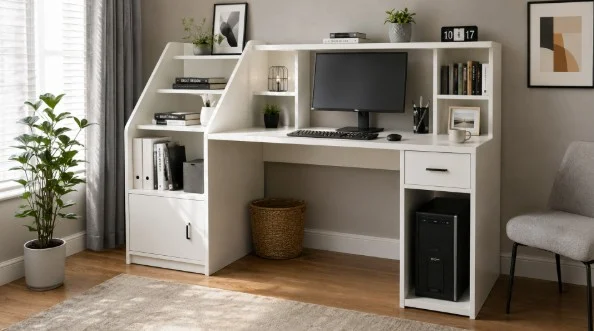
A laptop on the dining table can work for an hour. Use the same arrangement every day and the problems become harder to ignore.
The charger stretches towards the nearest socket. Papers compete with cups and plates. A notebook disappears whenever the table needs to be cleared. By evening, work belongings have spread into a part of the home that was never intended to hold them.
Students face much the same problem. Books move between the bed, dining table and sofa depending on which surface happens to be free.
A dedicated work or study zone does not necessarily require an entire room. A suitable table, a comfortable place to sit and enough room for the things used regularly can establish a clear working area within a bedroom, living room or another shared space.
What matters is planning it around the task rather than trying to recreate a full office at home.
1. Rethinking How One Room Can Support Focused Work and Study
Rooms have become good at doing more than one job.
A bedroom may include a desk for studying. Part of a living room might serve as a workstation during working hours. In a shared home, the same corner may be used by an adult during the day and a student later in the evening.
Problems usually appear when these activities have no defined place.
A laptop is easy enough to move. Add a mouse, notebook, headphones, charger, documents and a few pens, and setting up becomes a daily task. Clearing everything away afterwards is another one.
Giving work a specific area removes some of that effort.
It does not have to be large. What matters is having enough surface for the equipment genuinely being used. Someone working mainly on a laptop needs a different setup from a person using a monitor, keyboard and several documents at once.
The same applies to students. A child working from one textbook and notebook may need less table space than an older student regularly using books, a laptop and written notes together.
Start with the activity. The furniture can follow.
2. What Makes a Workspace Feel Comfortable, Clear and Purposeful
A desk can fit perfectly into an empty corner and still be frustrating to use.
Perhaps the chair cannot pull back comfortably. Maybe the nearest socket is behind the bed. The table could be deep enough for a laptop but too narrow once a notebook is opened beside it.
These details are easier to solve before the furniture arrives.
Begin by looking at what needs to stay on the work surface during a normal session. If that means a laptop, notebook and phone, mark out enough room for all three. If a monitor is involved, check the table depth as well as its width.
Legroom is equally easy to overlook. Drawers and lower shelves can provide useful storage, but they should not make sitting uncomfortable.
Electrical points deserve attention too. A workstation that requires an extension cable to cross a walkway has probably been placed in the wrong spot.
People considering computer table at Wooden Street can compare options according to table dimensions, available storage and the equipment they plan to use. A larger desk is not automatically the better choice. The right size is the one that accommodates the work without consuming floor area that the room needs for something else.
A clear surface helps as well. If half the table is permanently occupied by objects unrelated to work, the usable area is smaller than its measurements suggest.
3. Giving Different Tasks Their Own Flexible Space to Work
Not every household can dedicate permanent floor space to a study table.
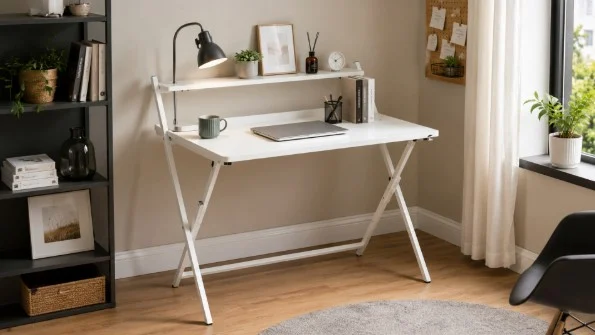
Sometimes the only available area is needed for another purpose once studying is finished. This is where a foldable table can make sense.
It provides a defined surface when required and can take up less room when it is no longer in use, depending on its design and placement. That can be useful in a compact bedroom or another room where a permanently projecting table would interfere with movement.
The important question is how often the table will be used.
If a student studies there for several hours every day and keeps numerous books nearby, a permanent desk with storage may be more convenient. If the surface is needed for shorter sessions and floor space has to remain flexible, a foldable option may suit the room better.
Parents looking at a foldable study table can explore Wooden Street while checking the table dimensions in use and when folded, along with the available writing surface and installation or placement requirements.
Think about where study materials will go once the table is closed too.
A folding surface solves the table footprint. It does not solve book storage by itself. A nearby shelf, drawer unit or existing cupboard may still be needed so books do not simply move to the bed or floor.
4. Designing a Workspace That Supports Both Work and Study
When adults and students share a work zone, the setup has to accommodate different routines.
An adult may need a laptop and headphones for calls during the day. A student might arrive later with textbooks, stationery and written assignments. If both use the same table, clearing the surface between sessions becomes part of the arrangement.
This is where simple storage helps.
A drawer can keep chargers and smaller accessories out of the way. Books can have a nearby shelf. Frequently used stationery can stay in one container rather than spreading across the desk.
There is no need to assign every object its own compartment. The system only needs to make changing users reasonably quick.
Lighting should also suit when the area is actually used. A corner that receives plenty of daylight during working hours may need a suitable task light when a student sits there in the evening.
Noise and movement around the area matter too. A desk beside the television may be convenient during quiet hours but distracting when other family members are using the room. If there is a choice between two locations, consider what happens around each one during typical work or study times.
The best corner is not always the emptiest one.
5. Making Small Workspace Changes That Improve Focus and Daily Flow
A workspace can become difficult to use long before it looks obviously messy.
One notebook stays open. Then a charger is left on the table because it will be needed tomorrow. A few papers arrive. Within days, setting down a laptop requires moving several other things first.
A short reset at the end of a work or study session can prevent that build up.
Put loose papers together. Return books that are finished with. Keep charging cables in the same place. Leave only the items that will actually be needed during the next session.
The area around the table matters too.
A bag permanently left beside the chair can make sitting down awkward. A drawer unit placed too close may reduce legroom. Even a waste bin in the wrong position can become something feet repeatedly knock into.
Watch how the workspace is used for a few days before adding more furniture.
If books continually pile up on the floor, some nearby storage may be useful. If everything already fits but the table still feels crowded, the problem may simply be that unnecessary items are staying on the surface.
Small corrections often work better than adding another cabinet.
6. A Better Work and Study Zone Designed Around Modern Routines [Conclusion]
A useful workspace begins with a fairly ordinary question: what needs to happen here?
For one person, the answer may be eight hours of computer work. For another, it could be evening study sessions. In a shared home, the same surface may need to support both at different times.
Once that is clear, decisions become easier.
Choose enough table area for the equipment and books being used. Check where the chair will move. Look at sockets before deciding on placement. If the room cannot spare permanent floor space, consider furniture that can be moved or folded when the work is finished.
Then give the everyday items somewhere sensible to go.
A home workstation does not need to look like an office, and a study corner does not need an entire room around it. It needs to be comfortable to sit at, simple to keep clear and convenient enough that setting up does not become a task of its own.
When those basics are right, even a relatively small corner can become a dependable place to get work done.