
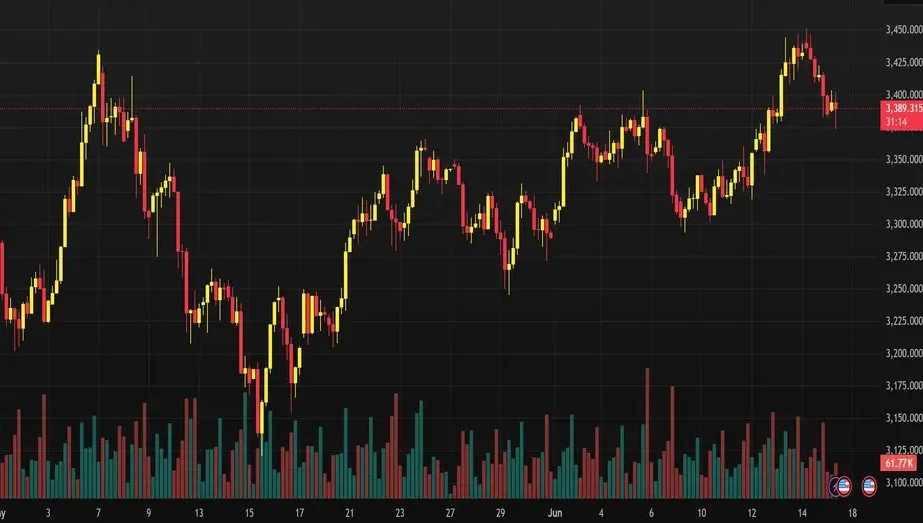
Forex trading is one of the most dynamic and widely practiced financial activities across the globe. Millions of market participants engage with currency markets every single day, driven by the pursuit of consistent returns and market mastery. Understanding the right forex trading strategies separates those who thrive in this environment from those who struggle. This guide breaks down the most effective approaches, explains when to apply them, and answers the questions traders ask most.
What Makes a Forex Trading Strategy Effective?
A strategy is only as good as the conditions it was built for. Effective forex strategies share a few core traits: they are rule-based, repeatable, and grounded in market logic. Traders who rely on gut instinct alone rarely achieve long-term consistency. A defined strategy removes emotional interference from the equation.
The best strategies also adapt. Market conditions shift—volatility expands and contracts, trends emerge and fade, and liquidity varies by session. The traders who perform best over time are those who understand not just how a strategy works, but when it works.
Trend Following: Trading in the Direction of Momentum
Trend following is among the oldest and most validated approaches in currency markets. The central idea is straightforward: identify the direction of a prevailing trend, then enter positions aligned with that direction.
Traders use tools such as moving averages, trendlines, and momentum indicators to confirm trend direction. A rising currency pair, consistently making higher highs and higher lows, signals an uptrend. Entering on pullbacks within that trend—rather than chasing breakouts—improves the quality of entries.
How Do Traders Confirm a Trend Before Entering?
Confirmation typically involves multiple timeframe analysis. A trader might observe the trend on a higher timeframe chart (such as the daily chart) and time entries using a lower timeframe (such as the four-hour chart). When both timeframes agree on direction, the probability of a successful trade increases.
Moving average crossovers, such as a shorter-period average crossing above a longer-period average, are commonly used as entry triggers within a broader trend framework.
Range Trading: Profiting from Market Consolidation
Markets do not trend all the time. Studies consistently show that currency pairs spend a significant portion of their time moving sideways within defined price boundaries. Range trading is the strategy built for this environment.
A range trader identifies a price ceiling (resistance) and a price floor (support), then buys near support and sells near resistance. The strategy requires patience and discipline—entering too early or holding positions past key levels erodes potential gains.
What Indicators Work Best for Range Trading in Forex?
Oscillators are particularly useful here. Tools like the Relative Strength Index (RSI) and the Stochastic Oscillator measure whether a currency pair is overbought or oversold. When price approaches resistance and RSI signals overbought conditions, a short trade becomes more justifiable. The opposite applies at support.
Volume analysis also helps. Low volume during sideways movement confirms that no major directional move is underway—validating the range environment.
Breakout Trading: Catching Big Moves at Their Start
Breakout trading involves entering a position the moment price moves beyond a key level of support or resistance, often on elevated volume. The rationale is that once a significant price boundary is broken, momentum tends to carry the pair further in that direction.
The challenge with breakout trading is false breakouts. Price can pierce a level briefly, trigger entries, then reverse—trapping traders on the wrong side. Experienced breakout traders manage this risk by waiting for a candle to close beyond the level before entering, or by using a retest of the broken level as the entry point.
How Can Traders Distinguish True Breakouts from False Ones?
Volume is the most reliable filter. A genuine breakout is typically accompanied by a spike in trading volume, signaling broad market participation. A breakout on low volume is more likely to fail. Additionally, the time of day matters—breakouts occurring during peak session hours (London or New York opens) carry more weight than those during quieter periods.
Carry Trade Strategy: Earning from Interest Rate Differentials
The carry trade is fundamentally different from the strategies above because its core profit mechanism is not price movement—it is the interest rate differential between two currencies. A trader borrows in a low-interest-rate currency and invests in a high-interest-rate currency, earning the difference (the “carry”) daily.
This strategy tends to perform best during periods of low global volatility. When financial markets are calm and risk appetite is healthy, carry trades attract capital flows that further strengthen the high-yield currency. In periods of market stress, however, carry trades can unwind rapidly as traders rush to exit.
Who Is the Carry Trade Strategy Best Suited For?
The carry trade suits traders with a longer time horizon and a lower risk tolerance toward short-term volatility. It is less suited to those looking for rapid, intraday profits. Position sizing matters greatly—given the potential for sharp reversals, over-leveraged carry positions can result in severe drawdowns during global risk-off events.
Price Action Trading: Reading the Market Without Indicators
Price action trading strips the chart down to its most fundamental element: price itself. Traders who use this approach rely on candlestick patterns, chart formations, and raw price behavior rather than lagging indicators.
Key patterns—such as pin bars, engulfing candles, and inside bars—signal potential reversals or continuations. A pin bar at a key support level, for instance, indicates rejection of lower prices and a potential move upward.
Why Do Experienced Traders Often Prefer Price Action?
Indicators are derived from price—they always lag behind what the market is doing in real time. Price action traders argue that reading the source data directly gives them an informational advantage. This approach also builds a deeper understanding of market psychology: why price moves, where traders are positioned, and where orders are likely to cluster.
Price action is widely regarded as one of the most transferable skills in trading. Once learned, it applies across all markets and timeframes.
About Forex Trading Strategies
Which forex trading strategy is best for beginners?
Trend following is generally the most beginner-friendly strategy. It aligns trades with the broader market direction, reducing the complexity of counter-trend calls and providing clear entry and exit logic.
How many strategies should a forex trader use at once?
Most professional traders focus on one or two strategies and master them thoroughly. Spreading attention across too many approaches leads to inconsistency. Depth of knowledge in a single strategy outperforms shallow knowledge across many.
How long does it take to become consistently profitable with a forex strategy?
There is no universal timeline. Traders who dedicate time to backtesting, journaling trades, and reviewing performance systematically tend to progress faster. The quality of practice matters more than the volume of trades taken.
Is it possible to automate forex trading strategies?
Yes. Many strategies—particularly those based on technical indicators—can be coded into automated trading systems. However, automation does not eliminate risk. Automated systems require regular monitoring, especially during abnormal market conditions.
What is the biggest mistake traders make when applying forex strategies?
Abandoning a strategy too quickly after a losing streak is among the most common errors. Every strategy experiences drawdown periods. Traders who lack confidence in their approach tend to switch strategies mid-drawdown, never allowing any single approach to demonstrate its full potential.
Building a Trading Edge That Lasts
Strategy selection is just one piece of the puzzle. Execution, risk management, and psychological discipline determine whether a strategy produces results over time. A trader who masters one approach—understanding its strengths, limitations, and ideal market conditions—is far better positioned than one who chases every new method.
Start by testing your chosen strategy on historical data. Then apply it in a controlled, low-risk environment before scaling. Trading journals are invaluable here: recording every trade, the reasoning behind it, and the outcome reveals patterns that would otherwise go unnoticed.
Forex markets reward preparation, patience, and consistency. The strategies outlined above have stood the test of time not because they work in every condition, but because disciplined traders know exactly when—and when not—to apply them.