
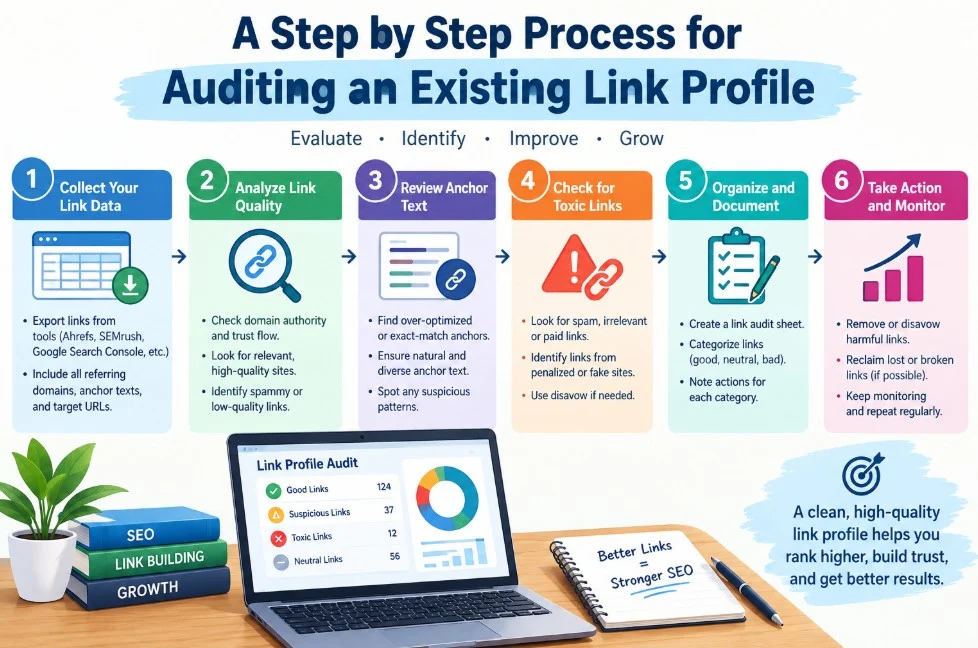
A website can collect backlinks for years without anyone taking a close look at where they came from. Some links may still be useful, while others may be outdated, irrelevant, or simply not worth much anymore. That is one reason businesses using linkbuilding services should know what is actually sitting inside their link profile. A proper audit gives you a clearer picture of what is helping your site and what deserves a closer look. It also gives you a chance to fix small problems before they become bigger headaches.
Start With a Full List of Backlinks
The first step is getting your hands on as much backlink data as possible. Use a reliable SEO tool to export the links pointing to your website, including the following:
- referring domain
- target page
- anchor text
- other available details
One tool may not show everything, so checking more than one source can uncover links that would otherwise be missed.
Do not worry about judging every link right away. At this stage, the goal is simply to build a useful list. If your website has been around for several years, expect the file to contain links you completely forgot about.
Check Where the Links Come From
Once you have your list, start looking at the websites sending traffic or authority your way. Visit the actual pages when possible instead of relying only on a domain rating or another number shown by an SEO platform. A website can have impressive metrics and still be a poor fit for your business.
Look for signs that the site has a real purpose and publishes content for actual readers. Ask the following questions:
- Does it cover topics related to your industry?
- Does the content make sense?
- Are there dozens of pages packed with unrelated links?
These details often tell you more than a single metric.
Look at Relevance
Relevance is one of the easiest things to overlook when reviewing backlinks. A link from a website that regularly discusses subjects connected to your business generally makes more sense than one placed on a completely unrelated page. That does not mean every link needs to come from a site in exactly the same industry.
Think about context instead. A marketing company might reasonably receive a link from a business publication, an entrepreneurship website, or a technology resource. A link from a page about something completely unrelated may deserve a closer look, especially if there is no obvious reason for the connection.
Review the Anchor Text
Next, pay attention to the words used in the links pointing to your site. A natural backlink profile usually contains a mixture of the following:
- brand names
- website addresses
- descriptive phrases
- other types of anchor text
If nearly every link uses the same keyword-heavy phrase, that pattern is worth investigating.
You do not need to panic over a few unusual anchors. Websites naturally pick up links in different ways, and you cannot control every word another publisher chooses. The useful question is whether the overall pattern looks normal or unusually repetitive.
Find Broken or Lost Links
An audit should not only focus on questionable backlinks. It can also uncover links that used to work but now lead to a deleted page, a redirect, or an error message. Those links may represent missed opportunities if the referring website is still active and relevant.
Check the pages receiving backlinks as well. A valuable link pointing to a page that no longer exists may need attention. Depending on the situation, you may be able to redirect the old URL, restore useful content, or contact the publisher about updating the link.
Look for Obvious Red Flags
Now it is time to sort through the links that look suspicious. Watch for websites filled with thin content, strange topics, copied material, or pages that appear to exist mainly to sell links. Links from hacked or compromised websites also deserve immediate attention.
Not every unwanted link is automatically harmful to your rankings. Search engines encounter plenty of strange links across the web, and many can simply be ignored. Still, identifying obvious problems gives you a better understanding of the history behind your backlink profile.
Separate the Good From the Questionable
At this point, create a simple system for sorting your findings. You might use categories such as useful, questionable, broken, irrelevant, and needs review. There is no need to make the process more complicated than it needs to be.
A spreadsheet can work perfectly well for this. Add notes about why a link landed in a particular category, especially if someone else may need to review the audit later. This makes the next steps much easier and prevents you from having to investigate the same links repeatedly.
Decide What Actually Needs Action
Not every questionable backlink requires immediate action. Start with the links that present the clearest concerns, such as obvious spam, hacked pages, or completely unnatural placements. For other links, keeping an eye on them may be enough.
If you are unsure about whether a link needs to be removed or disavowed, avoid making a rushed decision. Disavowal is not a cleanup button for every backlink you dislike. Review the situation carefully and consider getting professional SEO advice when the profile is complicated.
Make the Audit a Regular Task
A backlink audit should not be something you do once and then forget about. New links appear all the time, and old pages disappear without warning. A quick review every few months can help you spot changes before the backlink profile becomes difficult to manage.
Regular checks also make future campaigns easier to evaluate. You can see which types of placements are attracting useful links and which ones are adding little value. That information can help shape smarter decisions about where your SEO budget goes next.
Final Word
A backlink audit gives you a practical look at what is happening around your website instead of forcing you to rely on assumptions. When you work with linkbuilding services, knowing how to review the links being built can also help you ask better questions about quality and relevance. Take your time, investigate the websites behind the links, and avoid treating every unusual backlink as a crisis. A clean, well-understood link profile is much easier to manage when you regularly check what is coming in.