
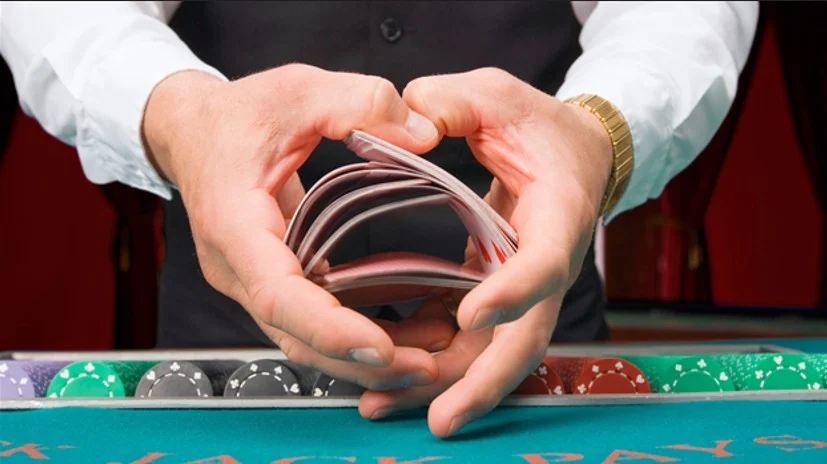
Why Digital Shuffling Matters
In a digital poker game, there can be many hands dealt in just a few seconds. The way the cards are made and dealt in the game is not the same as a real game at a card table. Players do not see the dealer mix cards by hand. So, people trust the game because of how the software makes, mixes, and hands out the cards.
If you play at betflik casino, knowing how real-time shuffling works makes it easier to see how multi-hand poker gives random results. A system should be set up so that card order cannot be guessed. It needs to be sure that game results come from set rules and are not changed by bets or what happened in past games.
What Happens Before the Cards Are Dealt?
The Digital Deck
A digital poker system does not move real cards. The software makes a deck on a screen and picks cards in a set order.
A simplified process looks like this:
- A new deck is made → A random mix is done → Some cards are picked → Hands are given → You see the results
The way the system is built will change based on the platform and the game provider.
The important thing is that the way we make things random should not change because of what any one player does.
What Is a Random Number Generator?
The Core of Digital Card Randomization
A Random Number Generator (RNG) is software or hardware that is made to give unexpected number results.
In a card game, the RNG can be used to find out which card is picked at each step when the cards are dealt.
For example:
- The system starts by making the deck ready.
- A random number is used to pick one card.
- The card pulled is taken out of the group.
- A new random number picks another card.
- This goes on until all hands are full.
This stops the system from picking cards in the same order every time.
Why Real-Time Shuffling Is Important
Preventing Predictable Sequences
In a place where many hands play, there may be a need to give out cards fast.
Real-time randomization helps make sure that the order used for one round is not just done again in another round.
A well-designed system should avoid:
- Fixed card sequences
- Predictable patterns
- Player-specific outcomes
- Manual interference
- Reuse of already picked cards within the same online deck
The goal is to make sure each good card result goes through the game’s set way of picking cards at random.
How Multi-Hand Dealing Works
One Game Can Produce Multiple Outcomes
Multi-hand poker lets you play several hands at the same time in the same gaming area.
A simplified illustration might be:
| Stage | Action |
| 1 | Virtual deck is initialized |
| 2 | Randomization occurs |
| 3 | Cards are allocated |
| 4 | Multiple hands are formed |
| 5 | Hand values are calculated |
| 6 | Results are displayed |
The way you do this can be much more advanced.
The main thing to know is that having more than one hand does not mean each hand gets its own deck. The way cards are dealt will depend on how the game is set up.
Does More Than One Hand Affect Fairness?
Not If the System Is Properly Designed
The number of hands being played does not make a game less fair by itself.
Fairness depends on how good and honest the random system is.
If the main system works the right way with the card group, each valid outcome should be picked in the same way.
For example:
Single-hand game: Randomization → Hand
Multi-hand game: You get a Random outcome. Then, you play Hand A, Hand B, and Hand C.
The second structure has more parts. But having more parts does not mean it is not fair.
What Happens to Previous Results?
Past Cards Shouldn’t Control Future Cards
A lot of people think that what happened before will change what comes next. They feel that the next hand “needs” to meet a certain result because of the last one.
A random system that works well should not change what happens only because the same result has shown up a few times.
For example:
Player win → Player win → Player win
doesn’t automatically mean:
A banker win must come next.
Historical results show what took place. They are not plans for what comes next.
Where casino VIP Fits Into the Technology
When you look at betflix vip, you need to pay attention to the details about how the game works and how safe it is. Do not think that having more than one hand in the game will change the chances of winning or losing.
Useful technical questions include:
- What kind of system is used to mix up the results?
- Is the game checked by someone who does not work for the company?
- How do they show the results?
- Can you read the game rules anywhere?
- How is the system kept safe from people who should not use it?
- Are game results saved, so someone can check them later?
- How do they keep their programs up to date?
These details show more about how the system works than things you can see or offers used to sell it.
Testing the Randomization System
Fairness Requires More Than a Random Button
A digital game that people trust can go through tests. These tests check if random picking in the game works the way it should.
Testing may examine:
Statistical distribution
It is to see if the results match what the math model says they should be.
Algorithm behavior
It is important to check if the randomization process works the way it is supposed to.
Security
Unauthorized people can step in and mess with the process.
Implementation
It is about if the game uses the right random method the way it should.
The exact testing needs will be based on the rules in place and the laws that apply.
What Does “Fair” Really Mean?
Fairness Isn’t the Same as Winning
A fair game doesn’t promise that each person will win. It also does not mean that results will change between players every time.
Fairness is about whether the game sticks to its rules. It also looks at if results are made without any wrong influence.
That means a real random system can still give the following:
- Several outcomes that are like each other
- Long runs where you keep losing
- The same hand values happen again and again
- Combinations that you did not see coming
- Short-term numbers look strange
Randomness can seem unbalanced when there is only a small amount of data.
Common Myths About Digital Shuffling
Myth 1: “The System Knows Who Is Betting.”
A well-made RNG needs to keep card results the same. That is, it should not change cards because of how people bet.
Myth 2: “A Losing Streak Means a Win Is Due.”
Past results don’t tell you what will happen next.
Myth 3: “More Hands Mean Lower Fairness.”
Multiple hands make things more complex. But this alone does not make the system unfair.
Myth 4: “A Random System Doesn’t Need Testing.”
You can and should test randomization systems when it is needed.
A Simple Fairness Checklist
Before using a digital card game, consider:
✓ Are the rules clearly explained?
✓ Is the randomization process described?
✓ Is there testing or certification information if it is needed?
✓ Are payouts clearly displayed?
✓ Is account and transaction security addressed?
✓ Does the platform give info about safe gaming?
These checks will not tell someone exactly what will happen to them. But they can help people see more about the place they are joining.
Technology and Responsible Play
Even if the randomization system works the way it should, no algorithm can make sure you will have a good session and win.
Players should set a clear amount of money for fun before they play. Do not raise your bets if you lost earlier hands.
A useful distinction is:
Fair randomization = confidence in the process
Winning strategy = not guaranteed
Those are two completely different concepts.
Real-time card shuffling matters a lot in digital multi-hand poker. It is what decides how the cards are picked and given out. A good system will use RNG, planned steps, safety checks, and proper tests to help make sure that results feel fair and hard to guess. If you are checking out betflix vip, knowing how these systems work is much better than looking at old rounds and thinking you can tell what will come next. Random card shuffling can make results hard to predict, but it will not always help you win. So, knowing the game rules and setting your own spending limits is very important for safe play.