
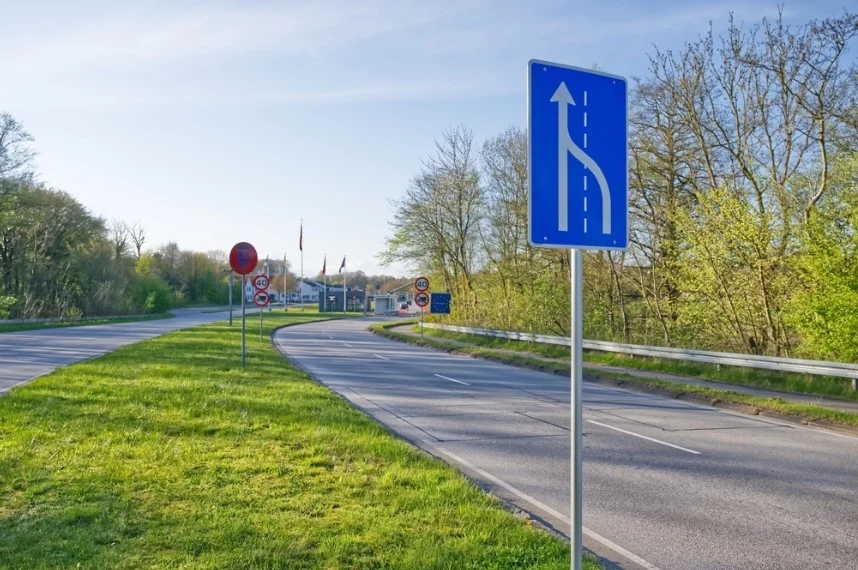
Highway merging areas keep traffic moving, but they also create some of the busiest and most demanding spots on the road. Cars speed up, slow down, change lanes, and search for open space within just a few seconds. A large truck enters this busy mix with very different limits than a passenger vehicle. It needs more room to move, more time to stop, and better visibility to react safely.
These differences often turn an ordinary merge into a place where small mistakes grow quickly. A truck accident lawyer often sees how these everyday traffic patterns become part of much larger crash investigations.
Merging Areas Ask Every Driver to Make Quick Decisions
A highway merge is more than simply joining another lane. Drivers must match the speed of moving traffic while checking mirrors, watching nearby vehicles, and finding enough space to enter safely. Every choice happens within a short distance, leaving little time to correct mistakes.
Traffic can also change without warning. One vehicle may brake suddenly while another speeds up to avoid being trapped behind slower cars. A driver entering from a ramp may hesitate before merging, while another may force their way into a small opening. These changing movements make merging areas far less predictable than long stretches of open highway.
Because so many drivers react differently, even a small error can affect several vehicles at once.
Why Large Trucks Face Different Challenges Than Passenger Vehicles
Longer Stopping Distances Leave Less Room for Sudden Changes
Large trucks carry heavy loads that make stopping much harder than most people realize. Even with good brakes, a fully loaded truck needs much more distance to slow down safely than a passenger car.
If traffic suddenly stops near a merging lane, the truck driver may not have enough room to avoid a collision. A car can often stop quickly or move around another vehicle, but a truck has far fewer options once it begins braking.
Blind Spots Make Nearby Traffic Harder to Track
Large trucks have blind spots along both sides, directly behind the trailer, and near the front of the cab. Vehicles entering from a highway ramp may disappear into these areas without the truck driver knowing they are there.
A driver who stays beside a truck while trying to merge may believe they are clearly visible, but the truck driver may not have a complete view at that moment. This lack of visibility creates extra risk during an already busy traffic situation.
Limited Space to Change Lanes
Many drivers expect trucks to move over and create space for merging traffic. That is not always possible. Another vehicle may already be beside the truck, or traffic in the next lane may be moving too closely together.
Changing lanes with a large truck also takes more time and careful planning. Safe lane changes depend on enough open space, something that merging areas do not always provide.
Common Situations That Increase Risk in Highway Merging Zones
Several traffic habits can quickly make merging areas more dangerous.
- Entering the highway at a speed much lower than surrounding traffic.
- Waiting until the last moment before merging.
- Several vehicles trying to enter together from one ramp.
- Sudden slowdowns ahead that leave little reaction time.
- Passing a large truck while lanes become narrower.
Each action may seem minor on its own, but together they can create confusion that spreads through several lanes of traffic.
Why Merging Crashes Often Involve More Than One Decision
Many people assume a merging collision happens because one driver made one mistake. Real crashes are often much more complicated than that. Several small decisions made within seconds can combine and create a dangerous situation.
One driver may enter too slowly while another changes lanes unexpectedly. At the same time, traffic ahead may begin slowing, leaving the truck driver with fewer choices. None of these events happens by itself, yet together they can lead to a serious collision.
Because of this, investigators often study the entire sequence instead of focusing on only the final impact. They look at how every vehicle moved before the crash and whether changing traffic conditions played a part.
What Drivers Can Do to Make Highway Merges Safer Around Large Trucks
Safe merging begins with patience and good awareness instead of rushing into traffic. Drivers should match highway speed before entering the lane whenever possible and continue watching traffic instead of focusing on only one opening.
Avoid staying beside a large truck longer than necessary because blind spots can hide smaller vehicles from view. Leave enough following distance after merging so the truck has room to slow down if traffic changes. Paying attention to turn signals, traffic flow, and nearby vehicles often creates safer choices than trying to force a quick merge.
Final Thoughts
Truck crashes near merging areas usually require more than a quick review of the damage. Investigators may examine roadway design, traffic patterns, vehicle positions, witness statements, camera footage, and other available evidence to understand how the collision developed. Looking at the full picture often provides a clearer understanding of the events leading up to the crash.
If questions remain after a serious collision, speaking with a truck accident lawyer may help someone better understand the investigation process and the information gathered during a claim.